Skip to content

Friends of Reader Rock Garden Society

Skip to content
  • The Garden
    • The Reader Story
    • Historical Timeline
    • Historical Photographs
  • Plan Your Visit
    • Location
    • Event Bookings
    • Reader’s Garden Cafe
  • News & Events
    • What’s New
    • Blog
    • Newsletters
    • Events Calendar
  • Get Involved
    • Join Us
    • Volunteer
    • Adopt A Bench
    • Donate
    • Contact
  • About Us
  • Member Login
    • Profile
    • Renewal
    • Logout
The Garden

The Garden

Garden Concept & Statistics

Garden Concept & Statistics

Plant Collection

Plant Collection

Not yet a member? Join us today! Register

Open from sunrise to sunset

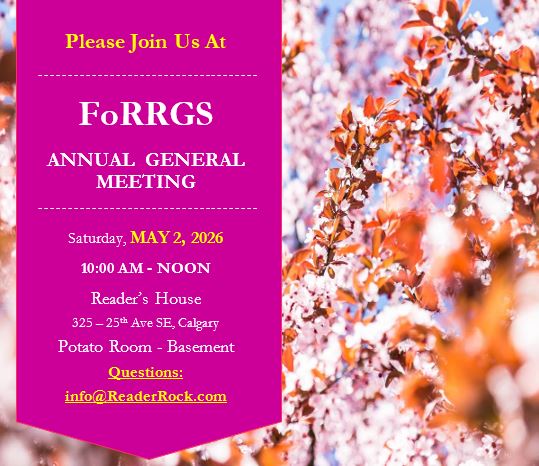
FoRRGS AGM

April 2, 2026April 2, 2026
Blog Events News #ReaderRockGarden #yyc

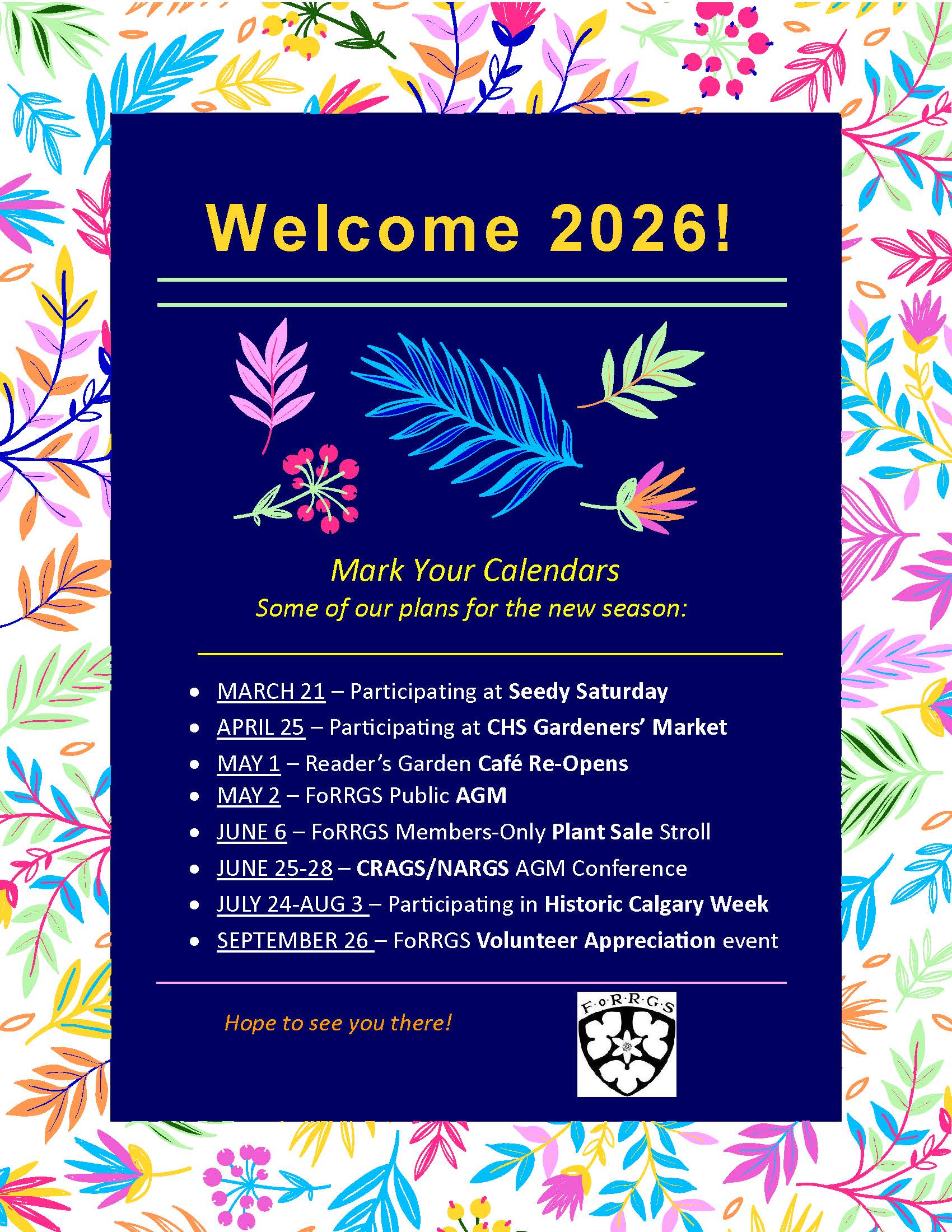
Welcome 2026!

February 26, 2026
Blog Events News

Registrations Are Now Open!

February 4, 2026
Blog Events News

About Us

1

Friends of Reader Rock Garden Society ("FoRRGS") is a non-profit, volunteer advisory group that works in conjunction with the City of Calgary to uphold the integrity and beauty of this Legacy Park/Garden and National Historic Site.

One man’s vision

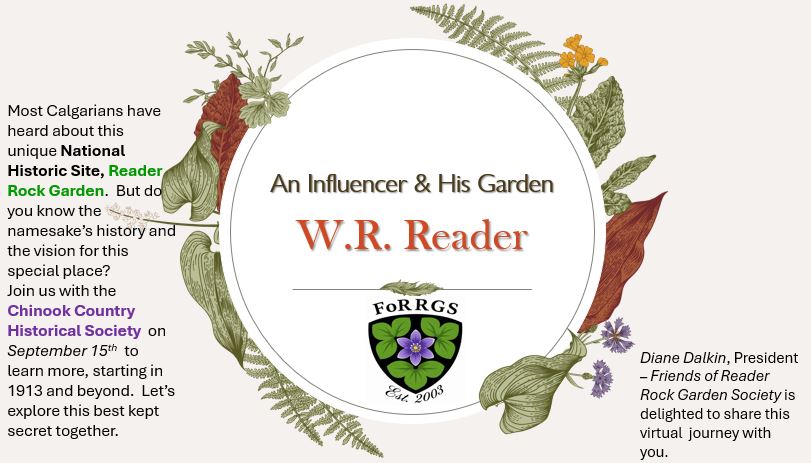
In 1913, William Reader had a vision which transformed the city landscape into a garden oasis. By 1943, over 4500 plant varieties had been lovingly cultivated in the three acres of land adjacent to Union Cemetary.

Today, the rehabilitation and progress of the Reader Rock Garden continues as we strive to maintain Reader’s vision.
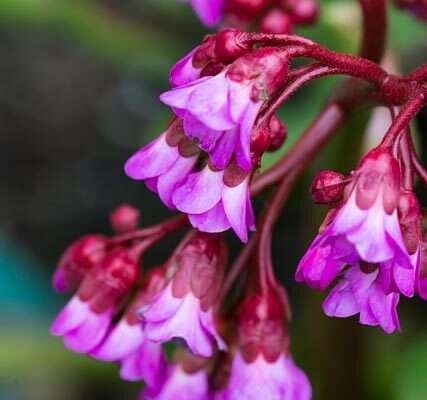
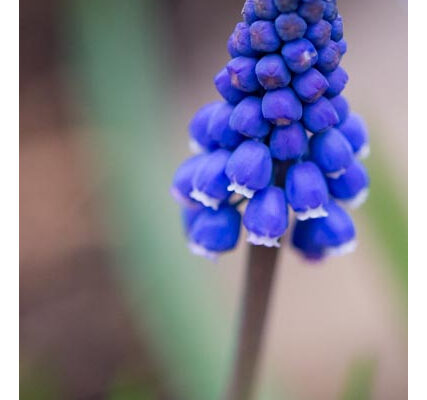
Learn more.


readerrockgarden

📍 Canada’s First Green Flag Award Winner 🏆
📍 First Legacy Park in Canada
📍 Canadian National Historic Site

🌿 Walk with us through Reader Rock Garden for a mo 🌿 Walk with us through Reader Rock Garden for a moment.

What you’re seeing today almost didn’t exist again.

Behind this beauty sits something you’d never guess: a Restoration Database. 💾🤓

Twenty-two years ago, a team built it from four of Reader’s original manuscripts plus a plant list from 1936. It holds the memory of original plants still alive when restoration began back in 2004.

That database now tracks exactly where most plant species grow in this garden today.

It also keeps historical plant names alive. That turned out to be pure gold, because so many plants have been renamed over the years.

Without that work, matching Reader’s original vision would have been nearly impossible.

So when you stop to smell a flower or trace a border with your fingers, you’re standing inside years of obsessive, beautiful research.

The garden restoration from twenty years ago was shovels and dirt, but also books and computers.

Next time you visit, you’ll see the data hidden in the petals. 🌸

Source: Reader Rock Ramblings, 09 2009, Page 4

#ReaderRockGarden #GardenRestoration #YYC #HistoricPreservation
The year was 1943, and William Reader was 68 years The year was 1943, and William Reader was 68 years old.

He had laid down his work less than one month earlier, after 29 years as Calgary’s Parks Superintendent. He barely had time to rest.

You can find him now in Section S of the Union Cemetery in Calgary. It is a quiet plot for a man who built a garden full of noise and color and the smell of damp soil.

His real monument is not the headstone. You have to walk to the garden to feel that. Every spring, the plants he chose push up through the ground again. Every visitor who walks the pathways moves through the shape of his attention.

That is a different kind of memorial. You do not read it. You walk inside it.

#InMemoriam #ReaderRock #YYCWinter #Legacy #WilliamReader

Source: Reader Rock Ramblings, 09 2009, Page 1

Photo Credit: Glenbow Archives NA-4099-2

Photo located at: https://spadeandthegrave.com/2018/05/24/curious-canadian-cemeteries-union-cemetery-calgary-alberta/
Tucked away from the bustling paths of Reader Rock Tucked away from the bustling paths of Reader Rock Garden, there’s a little slice of history that feels like a secret. 🌿👒

Meet Martha Rose Reader’s Upper Garden.

While William Reader poured his heart into the rest of the sweeping landscape, Martha had her own quiet retreat. A private spring sanctuary where she could escape, reflect, and watch the garden wake up below her.

The grandchildren remember the rule well. You could only enter with permission. And best behaviour? Absolutely required. This was Martha’s space, after all.

Imagine sitting there on a soft spring morning. No crowds. No tours. Just the rustle of new leaves and the first brave blooms. Pure peace.

And here’s the beautiful part. That small sanctuary still exists today. You can still stand where she stood, breathe in the same calm, and feel a century of quiet history under your feet.

🌸 Visit with respect. Stay a while. And maybe channel your best behaviour. 😉

#HiddenGemYYC #CalgaryParks #YYCHistory
Most people do not think of cemeteries as gardens, Most people do not think of cemeteries as gardens, but William Reader did.

Let us go back to 1914. The cemetery roads were muddy and uneven, so Reader graded them and saved every bit of loam for the grave plots. Then he hauled a thousand loads of cinders to surface everything.

Whole sections of the cemetery were sunken and lumpy with old graves, so Reader regraded Section M and part of Section A until the ground was level and seeded and looked like somewhere you would not mind walking through.

Those ugly wooden grave markers were rotting and leaning every which way, so he replaced them with cement ones that sat flush with the ground. His own men mixed the cement and poured the molds and set them in place. Cheaper, neater, kinder.

He planted over two thousand trees that year plus thirty three hundred flowering plants for the borders. We see that same impulse in Reader Rock Garden today in the way every plant seems considered and nothing is just thrown in.

When a huge storm washed roads away, Reader did not complain. He just installed drainage.

But here is the part that really shows us who he was. The burial records before 1914 were a mess of handwritten notes and misfiled pages. People searching for loved ones would wait, sometimes a long time. So Reader spent that winter reorganizing everything by lot number and alphabetically. He made two lists instead of one. That is the work of someone who has imagined what it feels like to be the one searching.

Every time we walk through this garden, we can picture him deciding where that spruce should go. He saw what needed doing and did it quietly and well, and we are still walking through the results more than a hundred years later.

Source: Annual Report of the Parks Department, City of Calgary, 1914 / City of Calgary Corporate Records, Archives

#ReaderRockGarden #YYCParks #CemeteryGardens #WilliamReader #GentleHistory
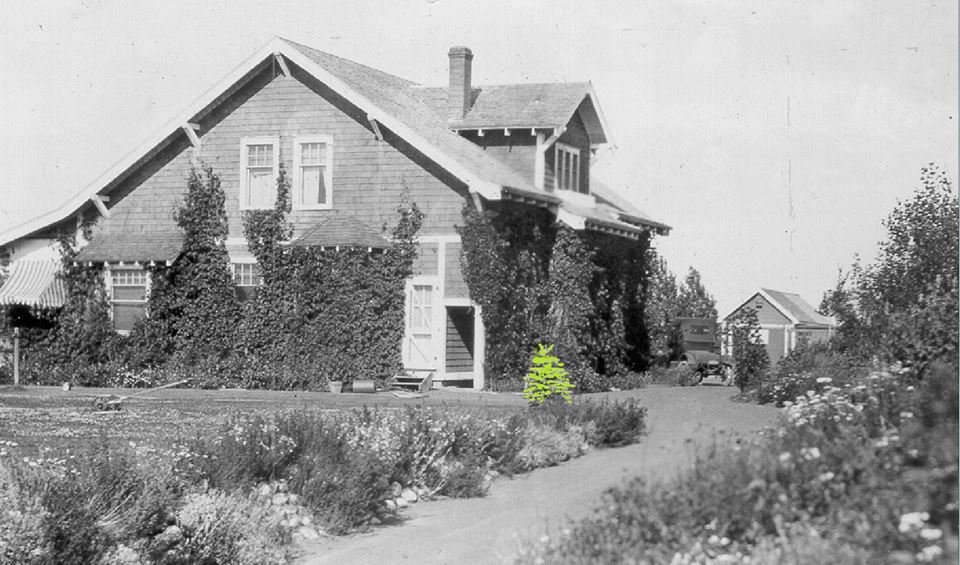
We’re standing at the replica superintendent’s hou We’re standing at the replica superintendent’s house. The original was torn down in 1944, so this version was rebuilt in 2006/2007.

Here’s where it gets interesting: the house sits west of where the original stood. Fire trucks needed room to turn around, so it had to be relocated 🤯

You’ll also see the wheelchair ramp on the exterior, added for accessibility. The original did not have that. ✅

Step inside, and you’ll notice changes that might not be obvious at first. The original dirt floored root cellar is now a classroom and meeting space. ⬆️ The main floor became a restaurant café. 🥗

William Reader used to say a house looked naked without vines growing on it, so he always had vines climbing every side.

Behind us, where the café kitchen sits now, there used to be a small garage for William’s Model T Ford. He drove that car between the parks. There was also room for chickens, a cow, and his vegetable garden.

Among the original features that remain: the spruce tree, now significantly taller than it was when Reader died in the 1940s.

Sources: Self Guided Walking Tour, Reader Rock Garden, City of Calgary / Reader Rock Ramblings, 09 2009, Page 2

#ReaderRockGarden #YYCParks #HistoricHomes #CalgaryWalkingTour #ReaderHouse
🌿 Calling all gardeners & plant lovers! 🌿 We’re e 🌿 Calling all gardeners & plant lovers! 🌿

We’re excited to share that FoRRGS will be at the Calgary Horticultural Society’s Gardeners’ Market, and we’d love to see you there! 🙌

📅 Saturday, April 25
📍 The Commons at ATCO Park | 5302 Forand Street SW, Calgary
⏰ 9:00 am – 4:00 pm

✨ What’s happening:

🎤 Speaker stage presentations
🌱 60+ exhibitors
🔥 2 Blue Flame Kitchen classes
📸 Photo contest
🪴 Container design challenge

🎟️ Tickets:
$12.50 for CHS members
$17.50 for non-members
🔗 Get tickets & details: calhort.org

🛍️ FoRRGS will be there! Stop by our table for:
✔️ Seeds
✔️ Gardening info
✔️ Memberships
✔️ Friendly chats about all things gardening!

Let’s grow together this season. We can’t wait to see you at the market!

#FoRRGS #YYCGardening #CalgaryHorticulturalSociety #GardenersMarket #YYCEvents
🌿🐘 Before the zoo, before the crowds and exhibits 🌿🐘

Before the zoo, before the crowds and exhibits, there were the islands of the Bow River. 🏝️

In the late 1800s, towering poplars, raspberries and saskatoon bushes made these islands little oases on the prairie. In 1890, town council named the lower island St. George’s and the upper island St. Patrick’s.

St. George’s Island was the first to be developed. A ferry connected it to the city from 1892 to 1900. By 1911, the park hosted over 200 weekend picnics and concerts. There were cinder pathways, a dance hall, even a brief teahouse.

In 1909, Calgary alderman Fred Curry started a fledgling zoo. But the real turning point came in 1917: two deer were corralled into cages and became an instant sensation.

Enter William Reader. Calgary’s park superintendent saw a bigger vision for a real zoo. In 1929, the Calgary Zoological Society was founded by Dr. Omer Patrick, marking the start of the Calgary Zoo we know today.

Reader wasn’t just a gardener. He was a founding member of that society. He believed Calgary deserved strong institutions for both plants and animals.

William Reader’s role as park superintendent shaped more than green spaces. It formed many of the foundations of the Calgary we know today, from our love of nature to our commitment to wildlife and public life. His legacy grows on at Reader Rock Garden and @thewilderinstitute.

📖 Sources:
Reader Rock Ramblings, Sept. 2009
Calgary Herald & Daily Hive (links below)

🔗 Read more:
Herald: https://calgaryherald.com/life/homes/condos/a-short-history-of-calgarys-bow-river-islands
Daily Hive: https://dailyhive.com/calgary/calgary-st-georges-island-history-zoo

📷 Photo credit: The Calgary Zoo / Facebook (historic); File 

#ReaderRock #CalgaryZoo #CalgaryZoologicalSociety #YYCSummer #WildlifeConservation
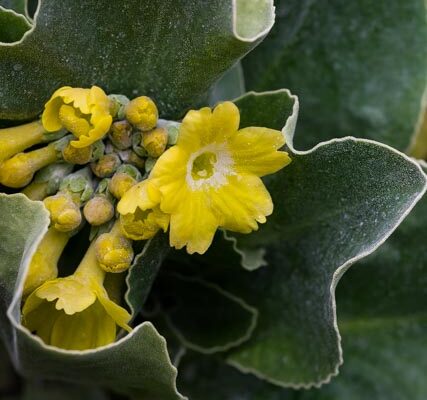
Reader’s Hope for Spring 💛 William Reader wrote Reader’s Hope for Spring 💛 

William Reader wrote that the appearance of flowers in spring is wonderfully heartening.

He said it lights the lamp of hope in any sheltered corner of the garden. 

These are not the words of someone who saw gardening as just a job.

Reader loved his work. He loved what a garden could give to people. Especially after a long, dark winter.

That is why this garden matters. It offers hope every single spring.

#HopeInBloom #ReaderRock #SpringAwakening #CalgaryHistory GardenQuotes

Source: Reader Rock Ramblings, 2009, Volume 1, Issue 2, Page 3
Follow our Flowers


  • Facebook
  • Instagram
  • Google Maps
  • Email

© 2025 Friends of Reader Rock Garden Society (FoRRGS) All Rights Reserved